
%20(600%20x%20150%20px)-2.svg)

Flyers' Power Play Flops Yet Again in Game 3: The Ultimate Downfall
The Philadelphia Flyers have been known for their strong power play throughout the regular season, but it wasn't until Game 3 of the second round of the Stanley Cup playoffs that it truly became their downfall. With a 3-0 series lead for the Carolina Hurricanes, the Flyers have a slim chance of staying alive in the competition with a game on Saturday.
Despite being in a similar situation against the Pittsburgh Penguins in the first round, where they had a 3-0 lead before the Penguins fought back, Thursday's game felt like the final nail in the coffin. The Flyers' power play, which was expected to excel with a new coaching staff and a more talented roster, has been nothing short of disappointing. In nine playoff games, they have only scored three goals on 33 power play opportunities, while also surrendering a short-handed goal against the Hurricanes.
The game started off with a power play opportunity for the Flyers, but they were unable to capitalize and were even scored on by the Hurricanes on their own power play. This trend continued throughout the game, with the Flyers struggling to take advantage of their power play chances, while the Hurricanes were able to convert on theirs.
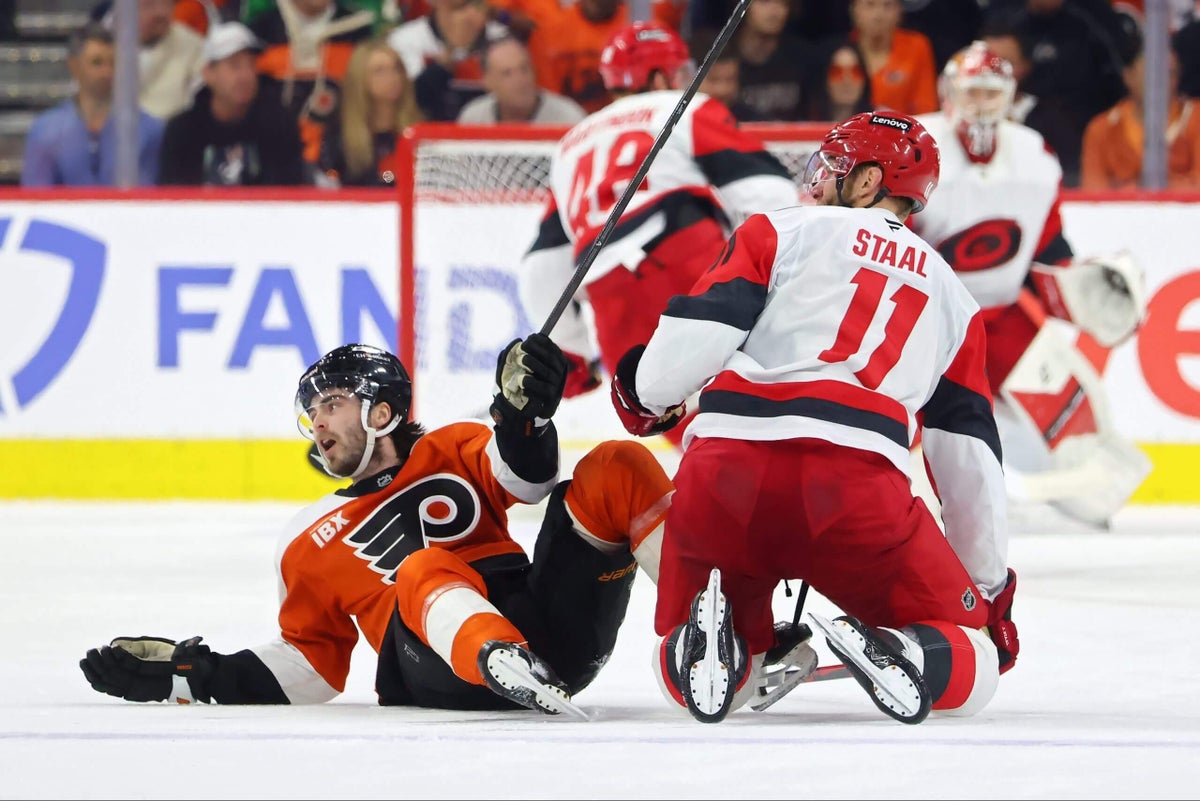
The turning point of the game came when Taylor Hall delivered a controversial hit on Flyers' Travis Sanheim, resulting in a minor penalty for boarding. Instead of retaliating and making Hall pay for his actions, the Flyers allowed a short-handed goal by Jalen Chatfield just 11 seconds later. This lack of response showcases the team's inability to capitalize on opportunities and make the most out of their power play.
While it may be easy to blame a single player for the failure of the power play, the responsibility ultimately falls on the coaching staff. Constantly switching up the players on the power play units and not allowing them to establish chemistry has hindered their success. It's clear that the team lacks a true power-play quarterback and that changes may need to be made in the offseason.
Despite keeping up with the Hurricanes at even strength, the Flyers were unable to make up for their power play struggles. The game was plagued with an excessive amount of penalties, with the teams combining for 24 minor penalties. This disrupted the flow of the game and played a significant role in the Flyers' defeat.
In the end, the Flyers' inability to take advantage of their power play opportunities and their lack of discipline ultimately led to their downfall. While they may have been the better team at even strength, their struggles on the power play proved to be their undoing.
It's clear that changes need to be made for the Flyers to have a chance in the playoffs next year. The team needs to address their power play issues and find a way to stay disciplined in high-pressure situations. Only then will they have a shot at making a deep playoff run.

.png)
